Leadership & Team Workshops

Based in Hong Kong and working across Asia and internationally, I facilitate workshops that help organizations address matrescence, working motherhood, women’s careers and parenthood at work. Sessions combine research, practical frameworks and facilitated discussion to build understanding and equip participants with tools they can apply within their teams and workplaces.
Who Is This For?
Workshops for organizations supporting working mothers and parents through pregnancy, parental leave, return to work and the transition to parenthood.
Designed for HR and People teams, women’s networks, working-parent ERGs, managers and leaders.
Popular Workshops:
Understanding Your Matrescence Journey (Signature Workshop)
Women’s Careers & Matrescence:
Supporting Employees Through Parenthood
Managers & Leaders:
Transition to Parenthood (Gottman Methodology)
Building Your Village
Parenthood & Relationships:
The Invisible Load: Mapping Your Mental and Emotional Labour
Wellbeing :
+ Additional workshops available upon request
What Participants Walk Away With

Practical frameworks for return-to-work, workload, flexibility, and career development conversations
Greater awareness of maternal wall bias and assumptions around ambition, commitment, and capability
Tools for managers to support employees without overstepping or avoiding important conversations
Clearer team norms around communication, support, and sustainable performance
Specific actions managers can apply in 1:1s, re-entry plans, and team planning
How This Supports Your People Strategy

Builds manager capability at the point where employee experience is often shaped
Reduces reliance on policy alone by improving day-to-day support
Helps managers make fewer assumptions and ask better questions
Supports more consistent employee experiences before, during, and after parental leave
Navigating the Transition to Motherhood: Matrescence in the Workplace
Client: Swire Properties, Hong Kong
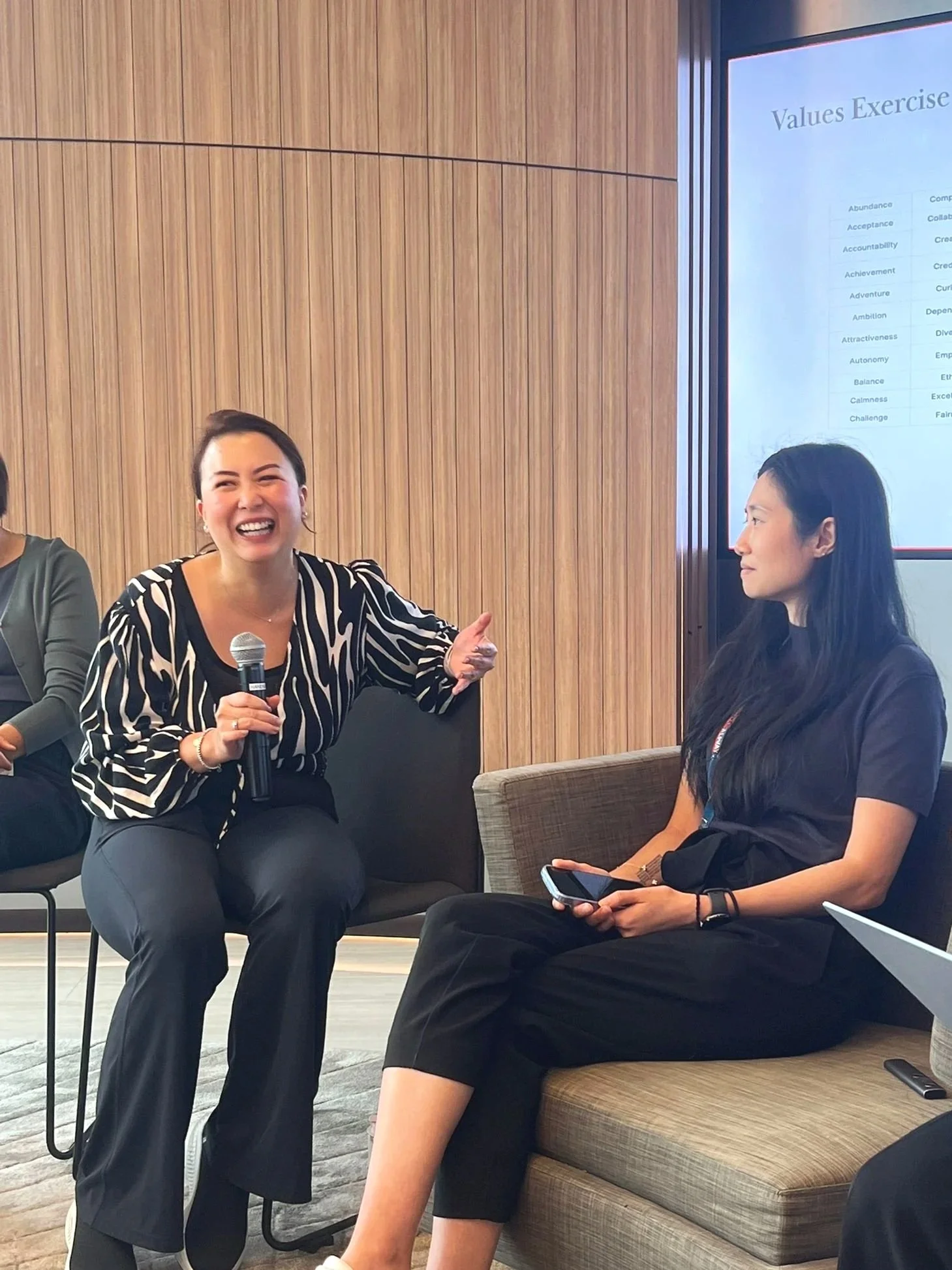
As part of Swire’s commitment to employee wellbeing and supporting working parents, I was invited by the Employee Resource Group, Working Parents Connect, to facilitate a 60-minute workshop exploring matrescence, the developmental transition into motherhood.
While organizations have made significant progress in supporting parental leave and flexible working arrangements, many women still return to work without language or frameworks to understand the profound identity shifts that often accompany becoming a mother. This session was designed to bridge that gap.
Drawing on research from psychology, neuroscience, leadership development, and coaching, the workshop explored the physical, emotional, and identity changes that occur during the transition to motherhood. Participants reflected on common experiences including the tension between ambition and guilt, the invisible mental load of parenting, shifting priorities, and the challenge of redefining success at home and at work.
Alongside practical tools focused on values, boundaries, capacity, and support systems, the session encouraged participants to view motherhood through a strengths-based lens, recognizing the resilience, adaptability, prioritization, and leadership skills that often emerge through the experience.
The session concluded with a discussion on workplace resources, community support, and practical ways organizations can create environments where parents can thrive both professionally and personally.
Key themes explored:
• Understanding matrescence as a major life transition
• The neuroscience behind the maternal brain
• The tension between being career driven, high-functioning and the guilt that many corporate working mothers experience
• Building sustainable support systems at work and home
• How motherhood strengthens skills that are highly valuable in the workplace, including prioritization, adaptability, empathy, and decision-making
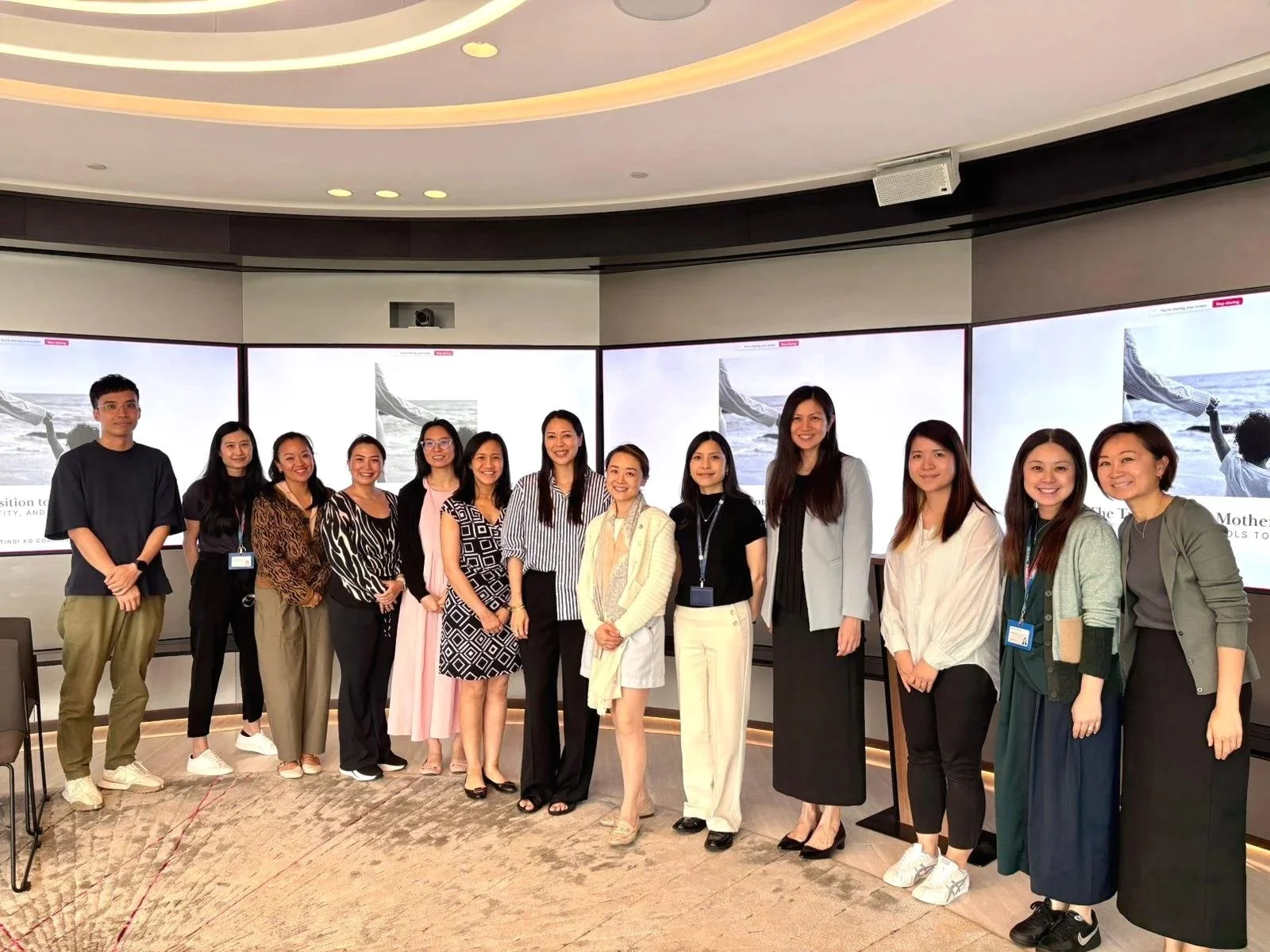
Client feedback:
“I particularly valued her introduction of matrescence, which encouraged us to question traditional notions of what motherhood “should” look like and to be kinder to ourselves when our experiences don’t align with idealised expectations. The values exercise was a simple yet powerful reminder not to lose sight of who we are beyond our roles.”
— Vivien Siu, Swire Properties